
choosing natural stone
selecting natural stone begins with its character and the demands of its setting. colour, movement, finish and care all influence whether a particular slab feels right for a home.
these six materials offer distinct possibilities. in our melbourne interior design projects, we consider them as part of a complete palette, alongside timber, metal, fabrics and the detailing of bespoke joinery.
CDK Stone
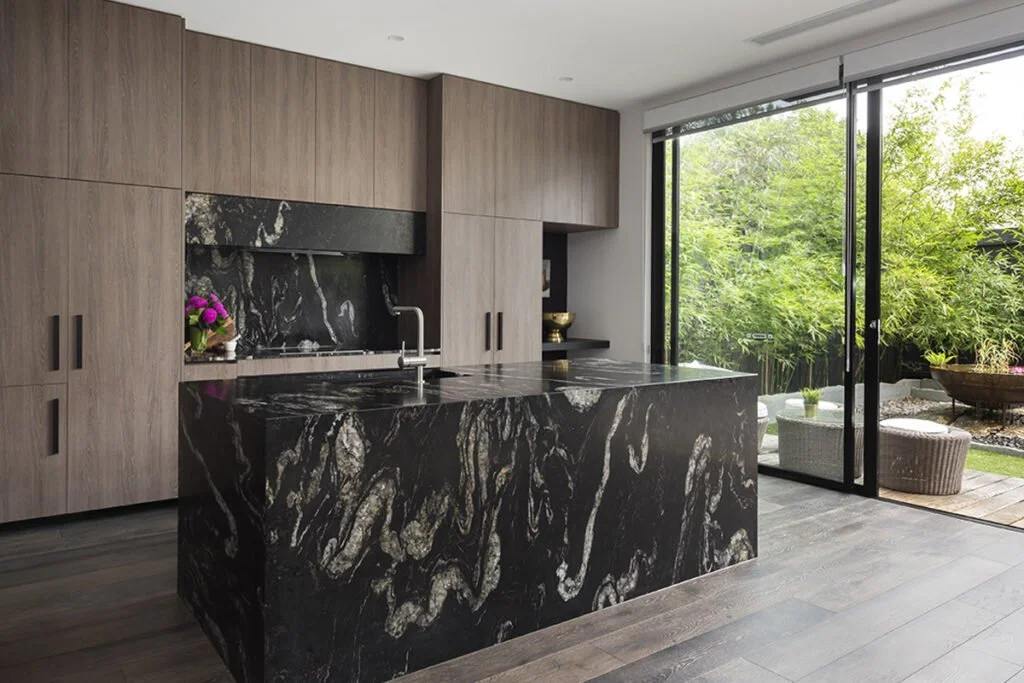
granite
granite’s visible mineral structure gives it a varied, sometimes granular appearance. it can offer a strong architectural presence in a benchtop, floor or fireplace surround, with colours ranging well beyond pale neutrals.
its practical qualities depend on the particular slab and finish. confirm sealing and care requirements with the supplier rather than assuming every granite is stain-proof or suitable for every application.
CDK Stone
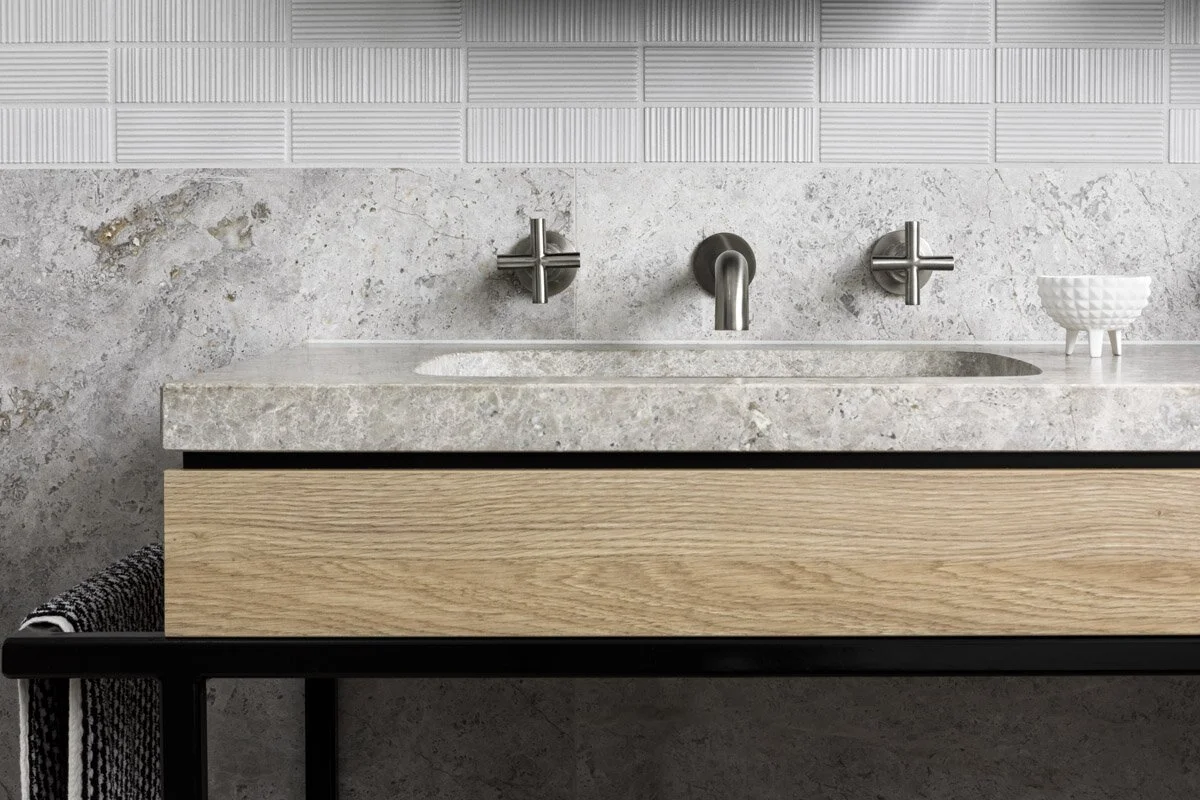
limestone
limestone brings a quieter expression, often with subtle tonal variation and traces of its sedimentary formation. its soft visual texture can create continuity across floors and walls.
colour, density and porosity vary between varieties. consider the location, slip resistance, sealing and sensitivity to acidic products when specifying it, particularly in wet areas or outside.
CDK Stone
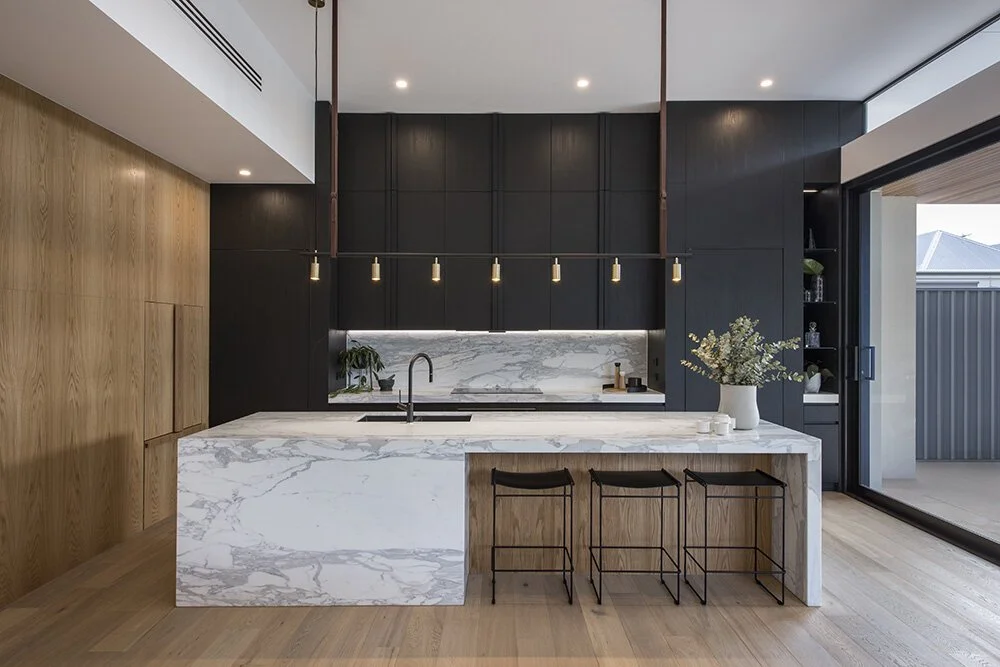
marble
marble’s veining can be restrained or richly expressive. its movement lends itself to carefully composed islands, vanities and fireplace surrounds, where slab selection and the placement of joints become part of the design.
marble requires considered care. acids can etch its surface and spills may stain it; choose it with an understanding of the patina that may develop through use.
CDK Stone
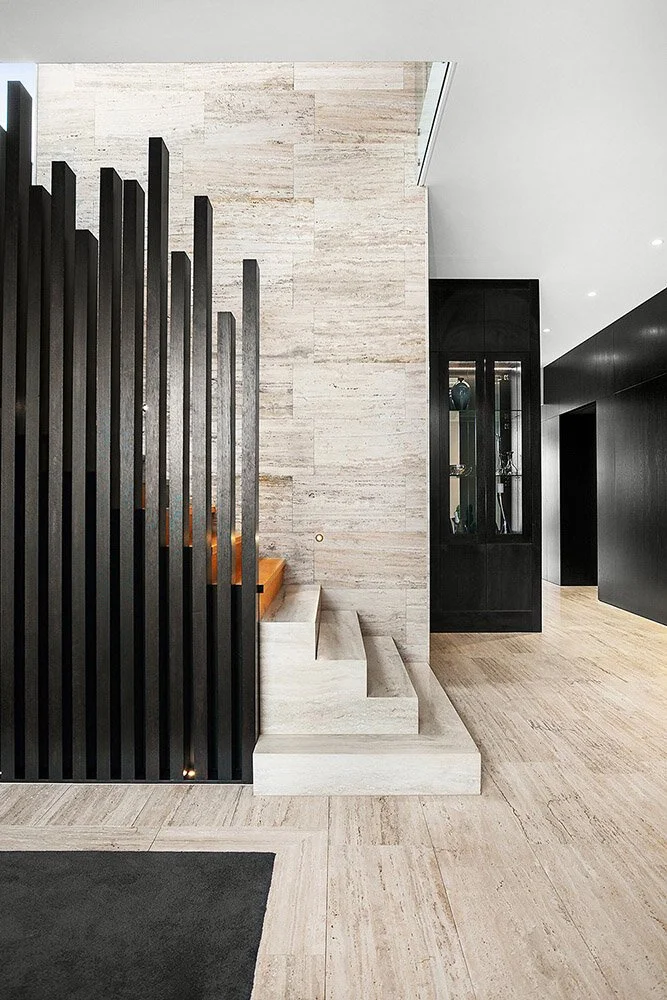
travertine
travertine’s characteristic pores and tonal bands give it a tactile, layered quality. beige, taupe and silver tones can sit comfortably with timber and a restrained interior palette.
filled and unfilled finishes have different appearances and care requirements. suitability for flooring, walls or outdoor areas should be confirmed for the specific product and installation.
Casey Brown Architecture
sandstone
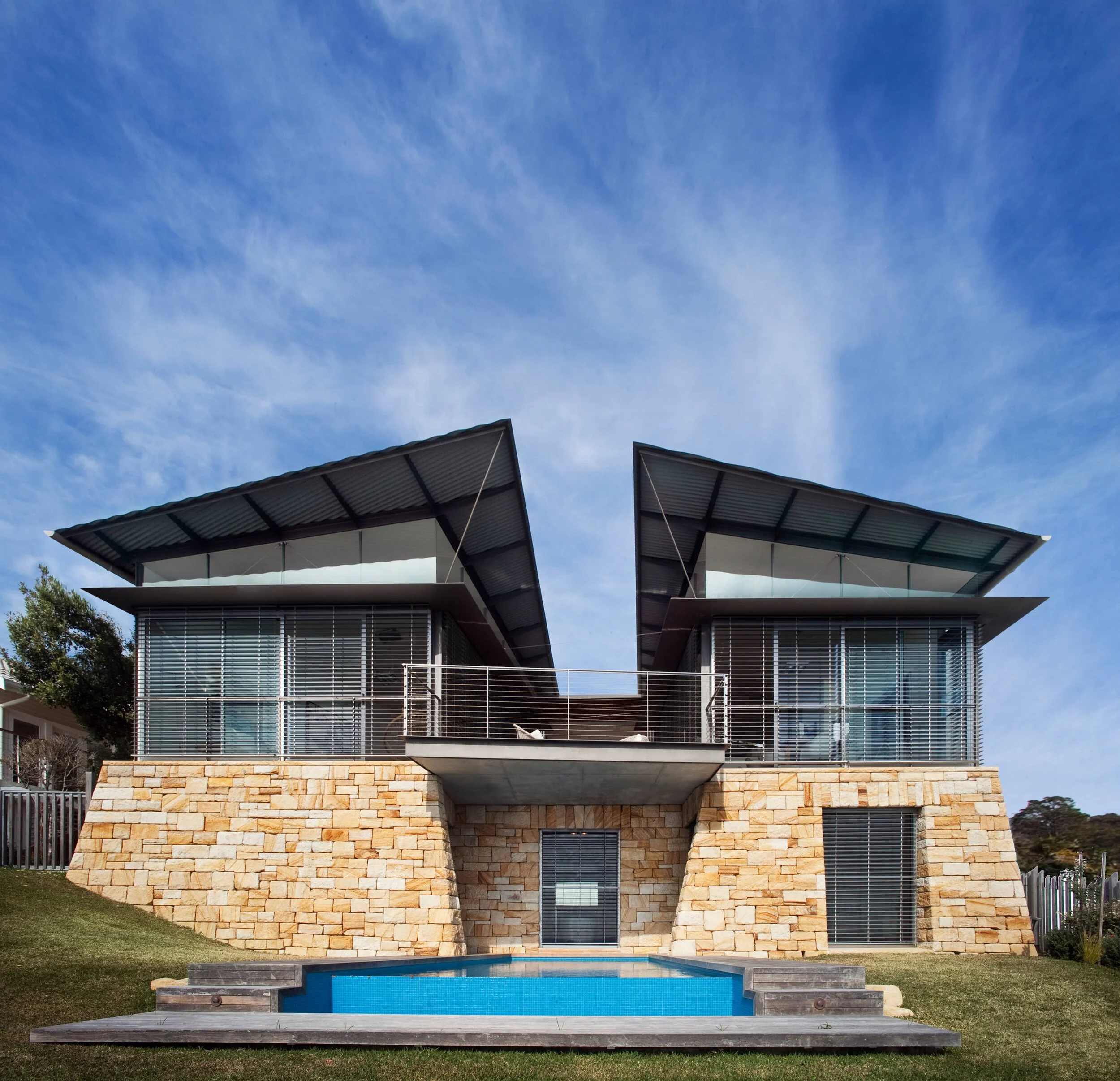
sandstone has a familiar place in australian architecture. its earthy colours and granular texture can bring warmth to paving and architectural surfaces.
its porosity and performance vary. discuss exposure, drainage, sealing and the intended finish with the supplier before selecting a stone for an outdoor or high-use setting.
CDK Stone
quartzite
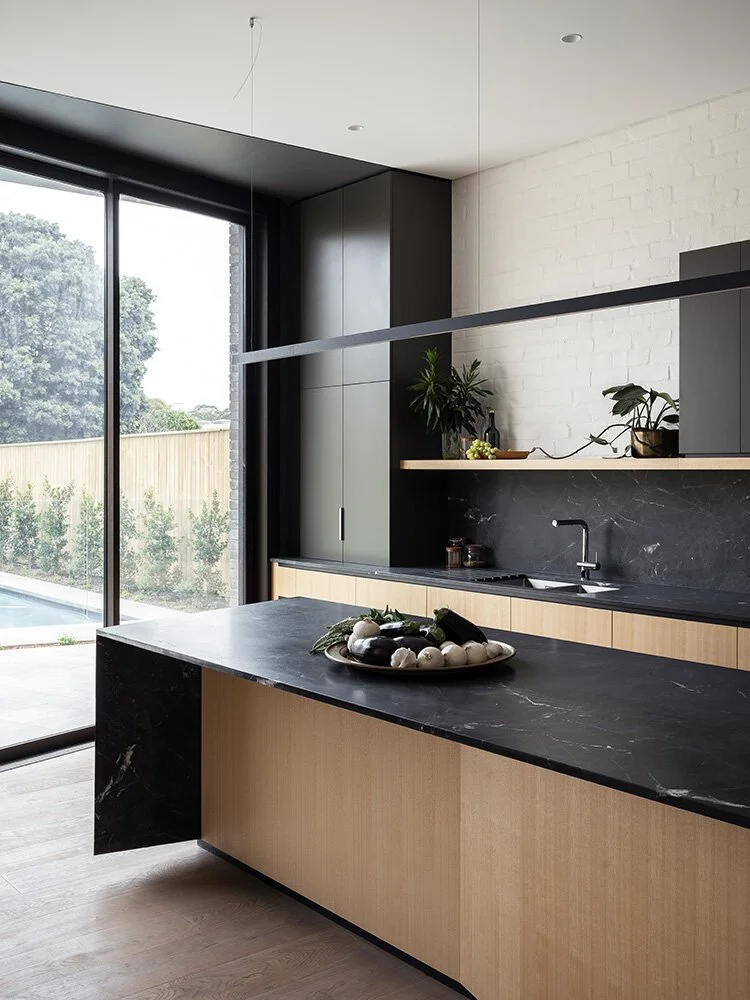
quartzite can combine pronounced movement with a broad range of colours, from quiet pale tones to green and pink. its visual depth makes it compelling for a sculptural kitchen island or a carefully detailed vanity.
confirm the material’s identification, performance and maintenance with the supplier. natural stone selections should be evaluated slab by slab, with fabrication and detailing considered early.
our interior materials and finishes service coordinates these choices with the wider design. explore our residential interiors to see how stone and bespoke details come together in melbourne homes.